
Type 2 Diabetes Stem Cell Therapy: What Patients Should Know
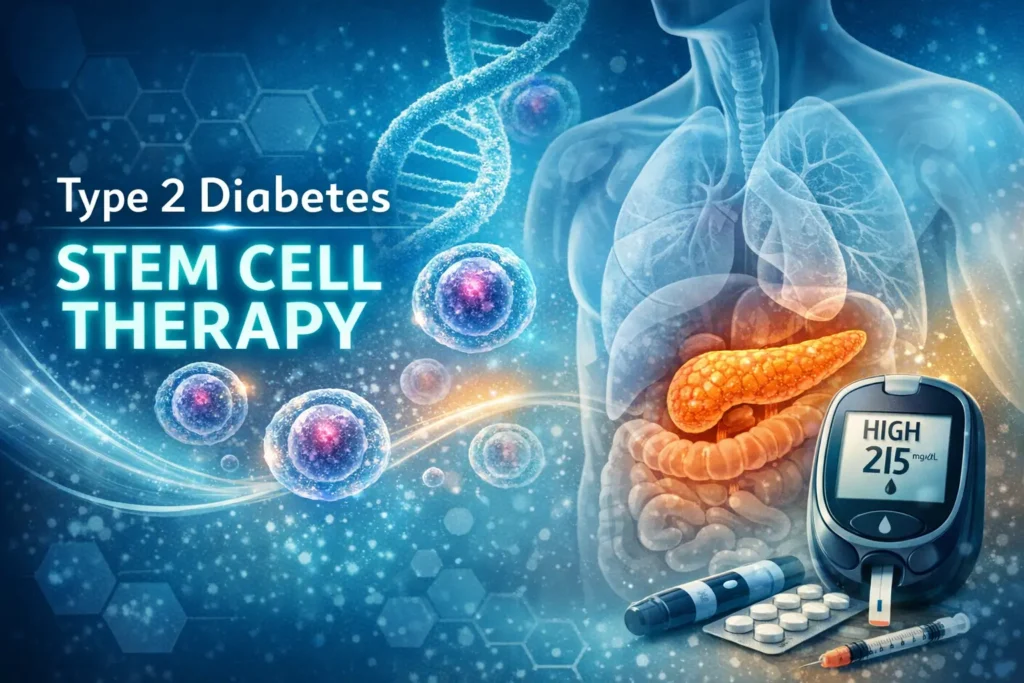
Type 2 Diabetes Stem Cell Therapy is being studied within regenerative medicine as an investigational approach for individuals diagnosed with type 2 diabetes, a chronic metabolic condition characterized by insulin resistance and impaired glucose regulation.
Type 2 diabetes may lead to elevated blood sugar levels and long-term complications affecting cardiovascular, renal, neurological, and ocular health. Researchers are examining how stem cell–based therapies may interact with inflammatory signaling pathways and metabolic regulation mechanisms associated with insulin resistance.
For a broader national overview, patients may also review our page on stem cell therapy in Mexico, which outlines regulatory context, safety considerations, and general evaluation processes.
What Is Type 2 Diabetes Stem Cell Therapy?
Type 2 Diabetes Stem Cell Therapy is studied within regenerative medicine as an investigational approach for individuals diagnosed with type 2 diabetes. Researchers are examining how stem cell–based therapies may interact with metabolic signaling pathways, inflammatory responses, and tissue environments associated with insulin resistance.
In research settings, providers may discuss Type 2 Diabetes Stem Cell Therapy as a non-surgical investigational option for patients who continue to experience metabolic instability despite lifestyle modification and guideline-directed medical management.
How Type 2 Diabetes Stem Cell Therapy Works
Current research examines how Type 2 Diabetes Stem Cell Therapy may interact with biological signaling pathways involved in insulin resistance and chronic low-grade inflammation. Investigators continue to study how stem cell–based approaches may influence immune regulation, metabolic signaling, and tissue environments associated with impaired glucose metabolism.
Rather than directly replacing pancreatic beta cells, researchers are evaluating whether stem cells may support the body’s existing regulatory mechanisms related to inflammation and metabolic balance.
What the Procedure Involves:
General Steps in Type 2 Diabetes Stem Cell Therapy
- Initial Evaluation & Diagnostic Testing
A licensed medical provider reviews the patient’s medical history and evaluates metabolic status using laboratory markers such as HbA1c, fasting glucose, insulin levels, C-peptide, lipid profile, and inflammatory indicators. This step helps determine disease stability and overall metabolic risk. - Stem Cell Sourcing
Medical providers obtain stem cells from ethically sourced tissue, such as bone marrow or umbilical cord–derived sources, following established medical and safety protocols in a controlled clinical environment. - Processing & Preparation
Laboratory professionals process the collected tissue to concentrate stem cells and prepare them for administration in accordance with established clinical standards. - Intravenous Administration
In some investigational protocols, stem cells may be administered through intravenous (IV) infusion, allowing systemic circulation and interaction with immune and metabolic pathways. - Post-Procedure Monitoring & Follow-Up
After treatment, medical staff monitor the patient and provide follow-up guidance. Ongoing evaluation may include repeat laboratory testing, metabolic marker assessment, and coordination with ongoing diabetes management.
In general, stem cell–based procedures for type 2 diabetes involve sourcing stem cells from ethically obtained tissue, processing them in a controlled laboratory setting, and administering them within structured investigational protocols.
In some cases, type 2 diabetes may coexist with conditions such as hypertension, cardiovascular disease, neuropathy, or fatty liver disease. Because of this, patients may undergo broader medical evaluation as part of an individualized care review.
At the same time, it is important to consider the following information.
Important Information
At this stage, research into Type 2 Diabetes Stem Cell Therapy is ongoing. Current studies continue to examine how stem cell–based approaches may:
- Interact with inflammatory signaling pathways
- Influence immune system regulation
- Affect tissue environments associated with insulin resistance
Type 2 Diabetes Conditions Studied in Stem Cell Research
Patients who inquire about Type 2 Diabetes Stem Cell Therapy often experience varying degrees of insulin resistance and metabolic instability. In regenerative medicine research, several type 2 diabetes–related conditions and complications are commonly discussed. Each presentation is different, and eligibility depends on laboratory findings, disease duration, and overall metabolic stability.
Early-Stage Type 2 Diabetes
Individuals in earlier stages of type 2 diabetes may still retain measurable pancreatic beta-cell function. Research settings examine how Type 2 Diabetes Stem Cell Therapy may interact with metabolic signaling pathways associated with inflammation and insulin sensitivity.
Insulin Resistance
Insulin resistance involves reduced cellular responsiveness to insulin in liver, muscle, and adipose tissue. Investigators continue to study whether stem cell–based approaches may influence inflammatory pathways linked to impaired glucose regulation.
Type 2 Diabetes With Cardiovascular Risk
Type 2 diabetes often coexists with hypertension, dyslipidemia, and increased cardiovascular risk. Research explores how regenerative medicine approaches may interact with systemic inflammatory and vascular signaling pathways associated with metabolic syndrome.
Type 2 Diabetes With Neuropathy or Kidney Changes
Some individuals develop complications such as peripheral neuropathy or early kidney involvement. Investigational research examines whether stem cell–based therapies may influence tissue environments affected by chronic metabolic stress.
Who May Be a Candidate for Type 2 Diabetes Stem Cell Therapy?
Type 2 Diabetes Stem Cell Therapy is not appropriate for everyone. A comprehensive medical evaluation is required to determine whether this investigational approach may be considered based on metabolic status, laboratory findings, disease duration, and overall health.
A patient may be considered for evaluation if they:
- Have been diagnosed with type 2 diabetes
- Experience persistent metabolic instability despite lifestyle modification and medical management
- Have measurable pancreatic function based on laboratory testing
- Are not in acute medical crisis
- Are seeking non-surgical investigational options
- Understand the investigational nature of stem cell–based therapies
Risks and Limitations to Consider
Importantly, while researchers continue to study Type 2 Diabetes Stem Cell Therapy, it is essential to understand its current limitations and potential risks. Because individual responses vary, outcomes and timelines cannot be guaranteed.
Type 2 diabetes involves complex interactions between insulin resistance, inflammation, pancreatic function, and lifestyle factors. These overlapping mechanisms may influence how the body responds to investigational regenerative approaches.
- Lack of standardized protocols:
Treatment approaches may vary between providers, as standardized clinical protocols for stem cell–based procedures in type 2 diabetes are still under development in many research settings. - Variation based on disease duration and severity:
Response may differ depending on factors such as duration of diabetes, degree of insulin resistance, remaining pancreatic function, medication use, and overall metabolic control. - Uncertain and variable timelines:
Some individuals may not experience noticeable changes. When changes occur, timelines—if any—can vary and remain unpredictable. - Possible risks and side effects:
As with any medical procedure, potential risks may include infection, inflammatory response, infusion-related reactions, or lack of measurable clinical improvement.
Why Patients Consider Stem Cell Therapy in Mexico
Some patients explore Type 2 Diabetes Stem Cell Therapy options outside the United States due to differences in regulatory frameworks, access to investigational regenerative medicine protocols, and cost considerations. In certain cases, international clinics may offer structured programs that are not widely available in all domestic healthcare settings.
For individuals managing type 2 diabetes and related metabolic conditions, access to investigational regenerative approaches, comprehensive medical evaluation, and coordinated care planning may influence this decision.
When considering care abroad, patients should prioritize medical transparency, provider credentials, safety protocols, and clear communication regarding investigational status and regulatory oversight.
Rejuvacell Medical Group works with international patients while emphasizing:
- Patient education
- Comprehensive metabolic screening
- Structured clinical protocols
- Coordinated follow-up planning
Medical Oversight & Experience
Licensed medical professionals evaluate Type 2 Diabetes Stem Cell Therapy within a structured clinical framework designed to support patient safety and appropriate metabolic decision-making.
Before any investigational procedure is considered, patients undergo metabolic screening that may include laboratory testing, medication review, cardiovascular risk assessment, and evaluation of overall health stability.
All stem cell–based procedures are:
- Reviewed by licensed medical professionals
- Evaluated on a case-by-case basis
- Conducted under established clinical protocols
- Coordinated with follow-up monitoring recommendations
Frequently Asked Questions
Is Type 2 Diabetes Stem Cell Therapy FDA approved?
At this time, most stem cell–based therapies for type 2 diabetes are considered investigational. Regulatory status depends on how cells are processed, how they are used, and the jurisdiction in which treatment is offered. Patients should review regulatory considerations and consult a qualified medical provider before pursuing care.
How is Type 2 Diabetes Stem Cell Therapy administered?
In many investigational protocols, stem cells may be administered through intravenous (IV) infusion. The specific approach depends on clinical evaluation, protocol design, and individual metabolic assessment.
Can Type 2 Diabetes Stem Cell Therapy replace insulin or medications?
Type 2 Diabetes Stem Cell Therapy is not considered a replacement for standard diabetes management. Patients are typically advised to continue physician-directed treatment unless otherwise instructed by their healthcare provider.
How long does it take to notice changes?
Because Type 2 Diabetes Stem Cell Therapy remains under investigation, timelines and outcomes are not predictable. Some individuals may not experience noticeable changes, and no result can be guaranteed.
Is medical evaluation required before treatment?
Yes. A comprehensive metabolic evaluation is required to determine whether Type 2 Diabetes Stem Cell Therapy may be appropriate based on laboratory results, medication history, and overall health status.
What the Patient Journey Typically Looks Like
Typically, patients begin with an initial consultation and metabolic screening to review symptoms, laboratory findings, medical history, and prior treatments. During this process, a medical provider evaluates glucose control, insulin use, cardiovascular risk factors, and overall metabolic stability.
If eligibility is confirmed, an individualized investigational plan may be discussed based on clinical findings and current regenerative medicine research protocols. The discussion includes procedural considerations, safety review, and informed consent.
When appropriate, Type 2 Diabetes Stem Cell Therapy may be administered according to structured clinical protocols. Post-procedure monitoring may involve follow-up laboratory testing, glucose tracking, medication review, and coordination with ongoing diabetes management.
Patient education and informed decision-making remain central throughout the process.
If eligibility is determined, a personalized approach may be discussed based on individual metabolic status and investigational protocol guidelines.
Request a Diabetes Consultation
If you have been diagnosed with type 2 diabetes and would like to learn more about Type 2 Diabetes Stem Cell Therapy, you may request a confidential consultation with a medical coordinator.
This discussion is designed to:
-
Review your medical history and laboratory findings
-
Discuss current glucose control and medication use
-
Explain investigational regenerative options
-
Answer questions about eligibility and next steps
A comprehensive medical evaluation is required before any investigational procedure is considered.
- No obligation
- Patient-focused discussion
- Medical review required